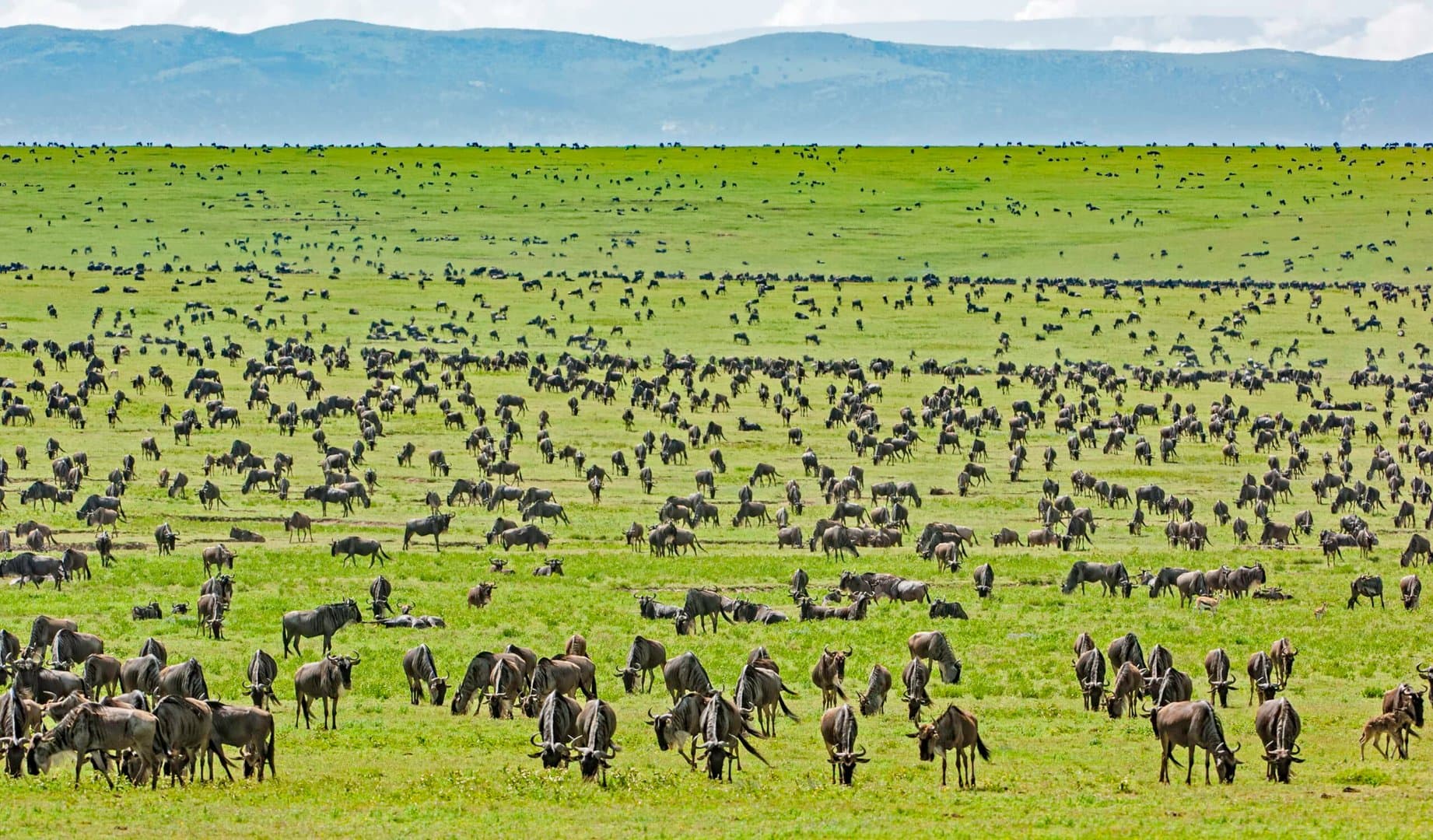
The Ngorongoro Crater is a UNESCO World Heritage Site and one of Africa's most spectacular settings. This ancient caldera hosts an incredible density of wildlife in a breathtaking natural amphitheater.
Rising 600 meters from the floor of the Great Rift Valley, the Ngorongoro Crater is the world's largest intact volcanic caldera. This natural amphitheater, formed when a giant volcano exploded and collapsed two to three million years ago, now shelters one of the most dense concentrations of wildlife on Earth.
UNESCO World Heritage Site
The crater floor spans 260 square kilometers of grassland, swamps, and acacia forest, supporting approximately 25,000 large animals. This includes the critically endangered black rhinoceros, whose population here represents one of Tanzania's most important conservation successes. The permanent water sources mean wildlife rarely needs to leave, creating a self-contained ecosystem unlike anywhere else.
The steep crater walls create a natural enclosure that has produced unique wildlife behaviors. Lions here have evolved to live in unusually large prides, sometimes numbering over 20 individuals. Flamingos paint Lake Magadi pink during certain times of year, while the surrounding highlands support Maasai pastoralists who have coexisted with wildlife for centuries.
Accommodation on the crater rim offers unparalleled views, with lodges positioned to capture both sunrise illuminating the crater floor and sunset casting long shadows across the ancient caldera walls.
Why Visit
Highlights of Ngorongoro Crater
UNESCO World Heritage Site
Highest wildlife density in Africa
Big Five in one day
Maasai culture
Stunning crater views